
1. Introduction
- Briefly introduce the topic.
- Explain why people are searching for this information.
- Give the reader a quick idea of what they will learn.
- Naturally include the primary keyword.
Target: 100–120 words
2. What Is [Main Topic]?
- Simple definition.
- Basic background or origin.
- What makes it important or popular in Indian food/culture.
- Explain it in beginner-friendly language.
Target: 120–150 words
3. Why Is [Main Topic] Popular in India?
- Cultural importance.
- Regional popularity.
- How it is commonly consumed or used.
- Modern-day popularity.
Target: 120–150 words
4. Different Types of [Main Topic]
Create useful subheadings for the major varieties.
4.1 [Type/Variety 1]
- Description
- Key characteristics
- Where it is popular
4.2 [Type/Variety 2]
- Description
- Key characteristics
- Where it is popular
4.3 [Type/Variety 3]
- Description
- Key characteristics
- Where it is popular
Target: 180–220 words
5. Ingredients / Components / Key Features
Depending on the topic, explain:
- Main ingredients
- Common spices
- Traditional components
- Regional variations
- Important characteristics
Target: 120–150 words
6. How Is [Main Topic] Traditionally Prepared/Used?
Give a simple step-by-step explanation.
- Preparation
- Cooking/processing
- Important techniques
- Serving or usage
Keep this informational rather than unnecessarily complicated.
Target: 120–150 words
7. Regional Variations in India
Explain how the topic differs across Indian regions.
North India
- Characteristics
- Common examples
South India
- Characteristics
- Common examples
East India
- Characteristics
- Common examples
West/Central India
- Characteristics
- Common examples
Target: 150–200 words
8. Common Questions About [Main Topic]
Use this section to target long-tail searches and Google’s “People Also Ask” style queries.
Is [Main Topic] healthy?
Answer directly.
What is [Main Topic] made from?
Give a concise answer.
How is [Main Topic] different from [Related Topic]?
Explain the difference.
Which region of India is famous for [Main Topic]?
Give a clear answer.
Can [Main Topic] be prepared at home?
Answer with practical information.
What is the best way to eat/use [Main Topic]?
Provide useful guidance.
Target: 200–250 words
9. Tips to Choose/Prepare/Enjoy [Main Topic]
Include practical tips such as:
- Choosing quality ingredients
- Traditional preparation tips
- Common mistakes to avoid
- Serving suggestions
- Storage tips, if relevant
Target: 100–130 words
10. [Main Topic] vs. Similar Foods
If relevant, compare it with 2–3 similar foods.
| Feature | [Main Topic] | [Similar Food] |
|---|---|---|
| Origin | ||
| Main ingredients | ||
| Taste | ||
| Popular regions | ||
| Typical use |
This can help capture comparison-based searches.
11. Key Takeaways
Summarize the most important points in 4–6 bullet points.
- What it is
- Why it is popular
- Main varieties
- Regional differences
- Important preparation/usage information
Target: 70–100 words
12. Frequently Asked Questions (FAQ)
Add 5–8 short FAQs based on real search queries.
Examples:
- What is [topic]?
- Where did [topic] originate?
- What are the main ingredients?
- Which state is famous for [topic]?
- Is [topic] vegetarian?
- How is [topic] traditionally prepared?
- What foods go well with [topic]?
- Can [topic] be made at home?
Keep each answer around 40–70 words.
13. Conclusion
- Summarize the article.
- Reinforce the main answer.
- Give the reader one useful final takeaway.
- Add a natural CTA to explore another relevant IndianFoodNest article.
Target: 80–100 words
Recommended article length
For a strong 1,000+ word informational article, aim for approximately:
- Introduction: 100 words
- Definition/background: 130 words
- Importance/popularity: 130 words
- Types: 200 words
- Ingredients/features: 130 words
- Preparation/usage: 130 words
- Regional variations: 150 words
- FAQs: 200 words
- Tips: 100 words
- Conclusion: 90 words
Total: ~1,360 words
SEO structure to use
Primary keyword: [main keyword]
Secondary keywords:
[keyword variation 1][keyword variation 2][keyword variation 3][keyword variation 4]
Long-tail questions:
- What is [topic]?
- How is [topic] made?
- Why is [topic] famous?
- Which state is famous for [topic]?
- Is [topic] healthy?
- What is the difference between [topic] and [related topic]?
Suggested URL:indianfoodnest.com/[main-topic]/
Suggested title:[Main Topic]: Complete Guide, Types, Ingredients, Uses & FAQs
Suggested meta description:Learn everything about [main topic], including its history, types, ingredients, preparation, regional variations, uses, and answers to common questions.
Important 2026 writing approach
Don’t try to reach 1,000 words by repeating the same information. Each section should answer a different search intent. Start with the direct answer, use clear H2/H3 headings, include relevant related questions, and add internal links to other useful IndianFoodNest articles.
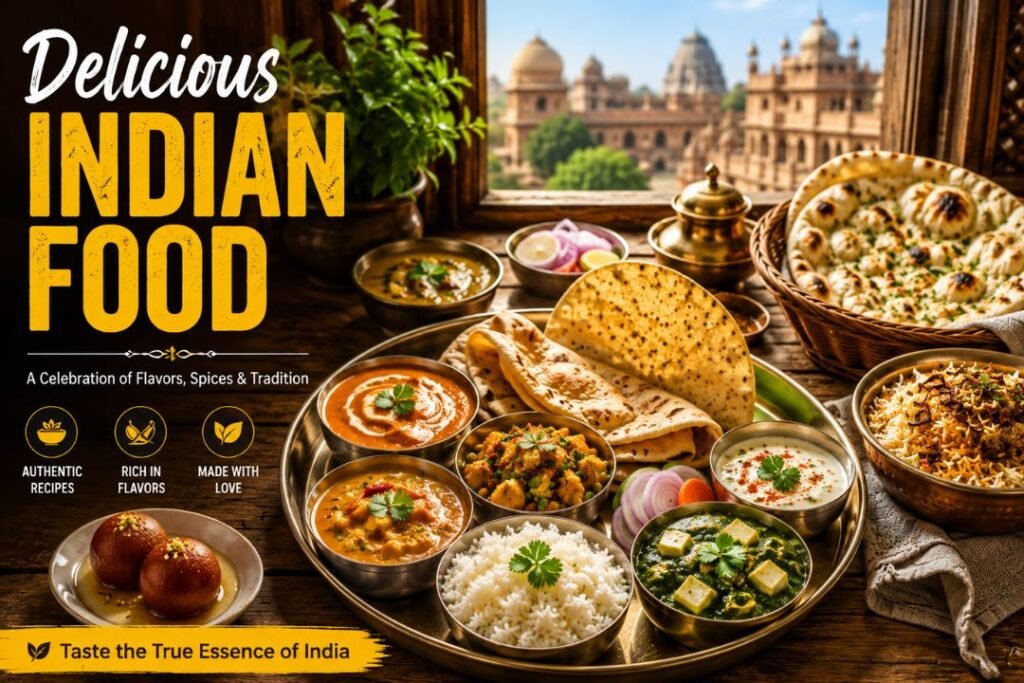
Indian Food is more than just a meal—it is a beautiful mix of flavors , spices, and traditions. From simple homemade dishes to rich regional recipes, Indian Food brings people together and offers something for everyone .Indian Food is a delicious journey through India’s rich culture, traditions, and regional flavors. Whether you love spicy curries, tasty street food, or traditional sweets, Indian Food always has something exciting to offer.
PEOPLE ALSO READ
Traditional Dishes To Eat In India